 Breakfast, Lunch
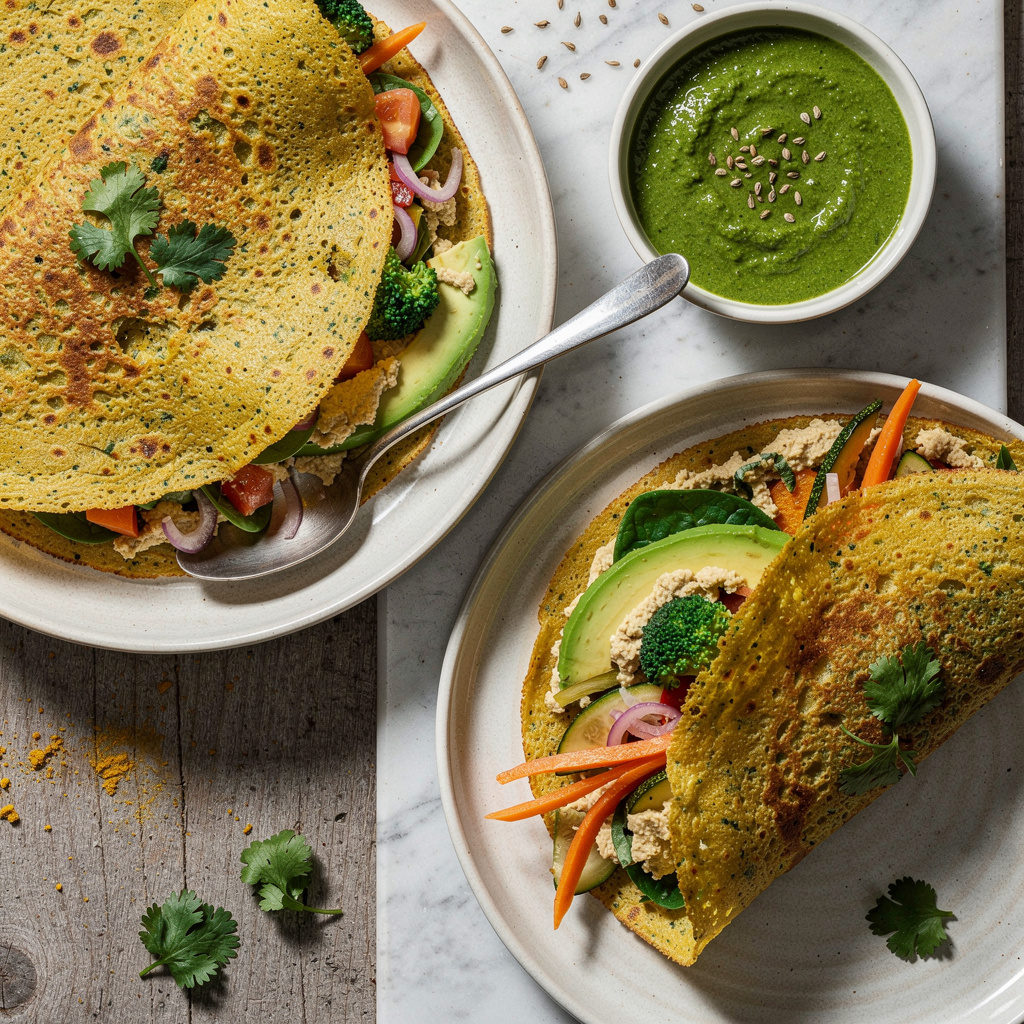
Chickpea Flour Crepe with Cilantro Chutney
Vegetable Substitutions: Use any non-starchy vegetables such as broccoli, carrots, zucchini, bell peppers, or spinach for added fiber and nutrients. Make It a Wrap: Spread hummus or cilantro chutney on the crepe, then layer with non-starchy veggies and avocado for a nutrient-dense, satisfying meal. Storage: Cooling: Allow crepes to cool completely before storing to prevent condensation and sogginess. Stacking: Place parchment or wax paper between crepes to avoid sticking. Storage Options: Refrigerator: Store in an airtight container or wrap tightly in plastic wrap/aluminum foil for 3–5 days. Freezer: Wrap in foil or use a freezer-safe bag for up to 2 months Reheating: Skillet: Lightly brush crepe with a few drops of olive oil or spray. Heat on a non-stick pan for 30–60 seconds per side until edges crisp up. Microwave: Wrap in a slightly damp paper towel and heat for 20–30 seconds to keep them moist. Health Benefits: Chickpea Flour Chickpea flour is made from ground chickpeas, a legume known for its low glycemic index (GI). Foods with low GI release glucose slowly, preventing sharp spikes in blood sugar. Chickpeas are rich in protein and soluble fiber, which slows digestion and improves satiety, helping with weight management, a key factor in diabetes control. Studies show that chickpea-based meals can reduce post-meal blood sugar compared to wheat-based foods. Chickpeas also provide minerals like magnesium and iron, which support metabolic health. Carom Seeds (Ajwain) Carom seeds are one of the traditional spices commonly featured in Indian and Middle Eastern cuisine. These seeds are packed with thymol, an active compound derived from thyme oil, that aids digestion and may inhibit enzymes responsible for breaking starch into sugar. This means carbohydrates are digested more slowly, reducing rapid glucose release. Ajwain also contains antioxidants that help combat inflammation and oxidative stress, both of which can worsen insulin resistance. Traditionally used in Indian cooking for digestive health, ajwain may indirectly support better blood sugar control by improving gut function and reducing bloating. Turmeric (Curcumin) Turmeric’s active compound, curcumin, has strong anti-inflammatory and antioxidant properties. Chronic inflammation is linked to insulin resistance, so reducing it can improve how the body uses insulin. Research shows curcumin can lower fasting blood sugar and HbA1c (a marker of long-term glucose control). It also helps protect pancreatic beta cells, which produce insulin, and may improve lipid profiles, reducing diabetes-related complications. Turmeric is widely studied for its role in metabolic health and is considered a natural aid for managing blood sugar. References: Jenkins DJ, Kendall CW, Augustin LS, et al. Glycemic index: overview of implications in health and disease. Am J Clin Nutr. 2012;95(1):262-266. Mudgil D, Barak S, Khatkar BS. Chickpea flour: composition, functionality, and applications. Food Chem. 2020;333:127454. Singh G, Maurya S, de Lampasona MP, Catalan CA. Chemical constituents, antimicrobial investigations, and antioxidative potential of Trachyspermum ammi (Ajwain) seeds. Phytother Res. 2014;28(7):1024-1030. Sharma P, Parmar J, Sharma P, et al. Antioxidant and antidiabetic potential of carom seeds (Trachyspermum ammi). J Food Sci Technol. 2016;53(1):337-343. Panahi Y, Khalili N, Sahebi E, et al. Curcumin lowers serum glucose and HbA1c in type 2 diabetes: a randomized controlled trial. Diabetes Care. 2018;41(1):e1-e2. Chuengsamarn S, Rattanamongkolgul S, Luechapudiporn R, et al. Curcumin extract for prevention of type 2 diabetes in a prediabetic population: a randomized controlled trial. Diabetes Care. 2012;35(11):2121-2127.
Source: Live Tula Meal Planner
1 steps, about 30 minutes
-
01In a large mixing bowl, whisk together chickpea flour, turmeric, chili powder, carom seeds, and salt. 2. Prepare the vegetables: Finely chop onions, tomatoes, cilantro leaves, and ginger, then add them to the bowl. 3. Gradually pour in water, whisking continuously to form a smooth, lump-free batter. If the batter is too thick, add 1–3 tablespoons of water until it reaches a pourable consistency. 4. Heat a non-stick pan or griddle over medium heat (about 350°F) and lightly grease with ½ tablespoon olive oil. 5. Once hot, ladle about ⅓ cup of batter onto the pan. Using the back of the ladle, gently spread it in a circular motion to form a thin crepe. 6. Cook for 2–3 minutes, until the edges crisp up, the bottom turns golden brown, and the crepe lifts easily. 7. Flip and cook for another 1–2 minutes on the other side, until both sides are lightly browned and the crepe is crispy at the edges but soft in the center. 8. Repeat with the remaining batter. 9. Prepare the cilantro chutney: Remove tough stems from the cilantro. In a blender, combine cilantro leaves, cumin powder, lemon juice, sugar, yogurt, salt, and pepper to taste. Blend until smooth. 10. Serve the crepes warm with a side of cilantro chutney. Enjoy!
Vegetable Substitutions: Use any non-starchy vegetables such as broccoli, carrots, zucchini, bell peppers, or spinach for added fiber and nutrients. Make It a Wrap: Spread hummus or cilantro chutney on the crepe, then layer with non-starchy veggies and avocado for a nutrient-dense, satisfying meal. Storage: Cooling: Allow crepes to cool completely before storing to prevent condensation and sogginess. Stacking: Place parchment or wax paper between crepes to avoid sticking. Storage Options: Refrigerator: Store in an airtight container or wrap tightly in plastic wrap/aluminum foil for 3–5 days. Freezer: Wrap in foil or use a freezer-safe bag for up to 2 months Reheating: Skillet: Lightly brush crepe with a few drops of olive oil or spray. Heat on a non-stick pan for 30–60 seconds per side until edges crisp up. Microwave: Wrap in a slightly damp paper towel and heat for 20–30 seconds to keep them moist. Health Benefits: Chickpea Flour Chickpea flour is made from ground chickpeas, a legume known for its low glycemic index (GI). Foods with low GI release glucose slowly, preventing sharp spikes in blood sugar. Chickpeas are rich in protein and soluble fiber, which slows digestion and improves satiety, helping with weight management, a key factor in diabetes control. Studies show that chickpea-based meals can reduce post-meal blood sugar compared to wheat-based foods. Chickpeas also provide minerals like magnesium and iron, which support metabolic health. Carom Seeds (Ajwain) Carom seeds are one of the traditional spices commonly featured in Indian and Middle Eastern cuisine. These seeds are packed with thymol, an active compound derived from thyme oil, that aids digestion and may inhibit enzymes responsible for breaking starch into sugar. This means carbohydrates are digested more slowly, reducing rapid glucose release. Ajwain also contains antioxidants that help combat inflammation and oxidative stress, both of which can worsen insulin resistance. Traditionally used in Indian cooking for digestive health, ajwain may indirectly support better blood sugar control by improving gut function and reducing bloating. Turmeric (Curcumin) Turmeric’s active compound, curcumin, has strong anti-inflammatory and antioxidant properties. Chronic inflammation is linked to insulin resistance, so reducing it can improve how the body uses insulin. Research shows curcumin can lower fasting blood sugar and HbA1c (a marker of long-term glucose control). It also helps protect pancreatic beta cells, which produce insulin, and may improve lipid profiles, reducing diabetes-related complications. Turmeric is widely studied for its role in metabolic health and is considered a natural aid for managing blood sugar. References: Jenkins DJ, Kendall CW, Augustin LS, et al. Glycemic index: overview of implications in health and disease. Am J Clin Nutr. 2012;95(1):262-266. Mudgil D, Barak S, Khatkar BS. Chickpea flour: composition, functionality, and applications. Food Chem. 2020;333:127454. Singh G, Maurya S, de Lampasona MP, Catalan CA. Chemical constituents, antimicrobial investigations, and antioxidative potential of Trachyspermum ammi (Ajwain) seeds. Phytother Res. 2014;28(7):1024-1030. Sharma P, Parmar J, Sharma P, et al. Antioxidant and antidiabetic potential of carom seeds (Trachyspermum ammi). J Food Sci Technol. 2016;53(1):337-343. Panahi Y, Khalili N, Sahebi E, et al. Curcumin lowers serum glucose and HbA1c in type 2 diabetes: a randomized controlled trial. Diabetes Care. 2018;41(1):e1-e2. Chuengsamarn S, Rattanamongkolgul S, Luechapudiporn R, et al. Curcumin extract for prevention of type 2 diabetes in a prediabetic population: a randomized controlled trial. Diabetes Care. 2012;35(11):2121-2127.
No notes yet.