 Side Dish
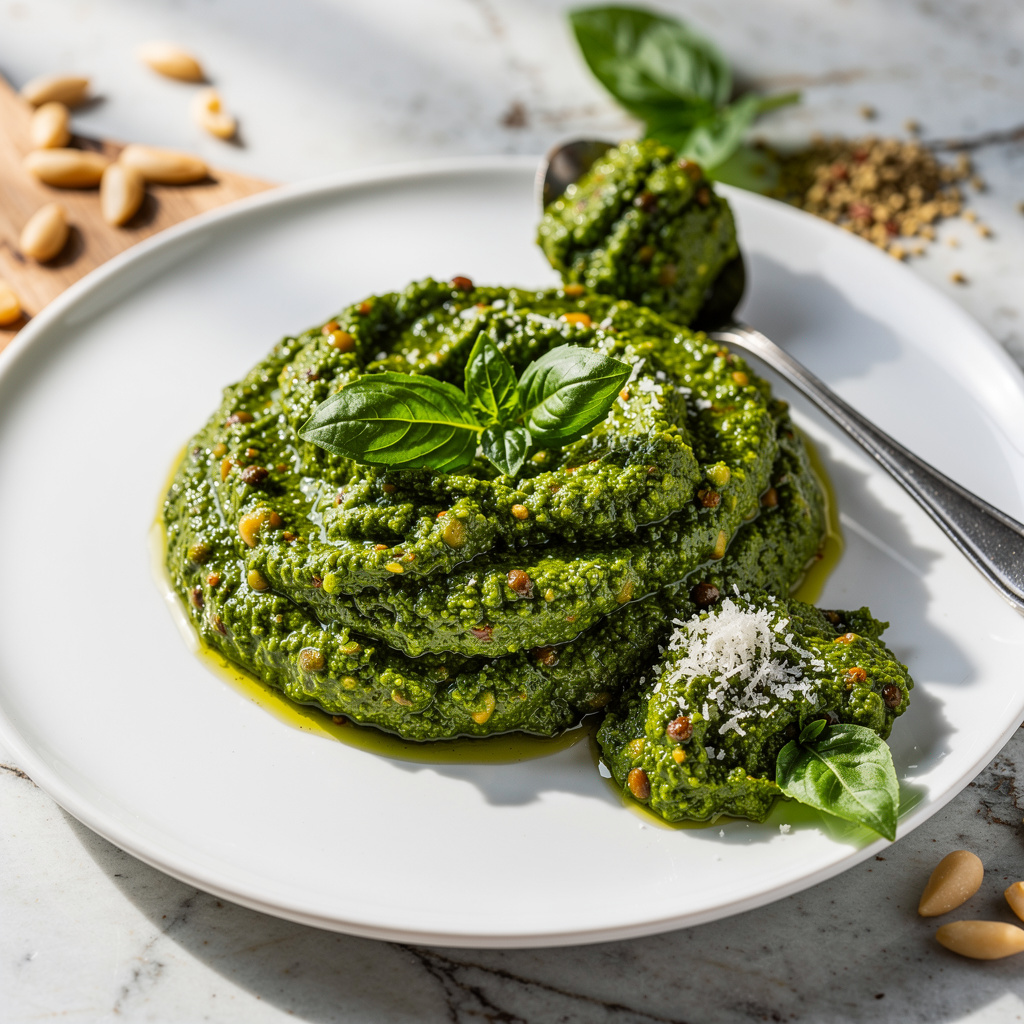
Fenugreek Basil Pesto
Store in an airtight container in the refrigerator for up to 7 days after preparation. Tips on how to use pesto: With pasta: Toss with hot pasta and reserve a little pasta water to loosen the pesto to help it coat evenly. As a spread: Use on sandwiches, wraps, or flatbreads in place of mayo or butter. As a dip: Serve with raw or roasted vegetables, crackers, or pita chips. For a lighter dip, swirl pesto with plain Greek yogurt. With proteins: Spoon over lean proteins, avocado toast, scrambled eggs, etc. for an herb-forward sauce. Health Benefits: Fenugreek Fenugreek is an herb commonly used in South Asian, Middle Eastern, and Mediterranean cuisines, with its seeds traditionally valued for both culinary and medicinal purposes. Fenugreek seeds are rich in soluble fiber, protein, and bioactive compounds such as saponins and alkaloids, which contribute to their health benefits. Research suggests that fenugreek may help improve blood glucose control by slowing carbohydrate digestion and absorption, enhancing insulin sensitivity, and reducing post‑meal blood sugar spikes. For people with diabetes, incorporating fenugreek into meals may support better glycemic regulation and modest improvements in HbA1c when used as part of a balanced diet, making it a functional food with potential benefits for diabetes management. Nutrition Tip: Include healthy fats to improve blood sugar control. Adding healthy fats, such as olive oil, nuts, seeds, avocado, or nut butters, to meals can help slow carbohydrate digestion and reduce post‑meal blood sugar spikes. Healthy fats also improve satiety, meaning you feel full longer, which can support appetite control and prevent overeating. For people with diabetes, pairing carbohydrates with unsaturated fats (instead of eating carbs alone) can lead to more stable blood glucose levels and better overall metabolic health. References: Shabil M, Bushi G, Bodige PK, et al. Effect of fenugreek on hyperglycemia: a systematic review and meta‑analysis. Medicina (Kaunas). 2023;59(2):248. doi:10.3390/medicina59020248 [mdpi.com] Najam A, Zahra MH. Exploring the therapeutic potential of fenugreek as an anti‑diabetic agent: a comprehensive review. Cent J Hum Nutr Food Sci. 2024;12:1187. Imamura F, Micha R, Wu JHY, et al. Effects of saturated fat, polyunsaturated fat, monounsaturated fat, and carbohydrates on glucose‑insulin homeostasis: a systematic review and meta‑analysis of randomized controlled feeding trials. PLoS Med. 2016;13(7):e1002087. doi:10.1371/journal.pmed.1002087
Source: Live Tula Meal Planner
1 steps, about 2 minutes
-
01Drain and rinse the soaked fenugreek seeds thoroughly. 2. In a food processor, combine the fenugreek seeds, basil leaves, pine nuts, garlic, and Parmesan cheese. Pulse until finely chopped and well combined. 3. With the food processor running, slowly drizzle in the olive oil until the mixture forms a smooth, creamy paste. 4. Season with salt and pepper to taste and pulse briefly to incorporate. 5. Serve immediately, or transfer to an airtight container and refrigerate for up to one week.
Store in an airtight container in the refrigerator for up to 7 days after preparation. Tips on how to use pesto: With pasta: Toss with hot pasta and reserve a little pasta water to loosen the pesto to help it coat evenly. As a spread: Use on sandwiches, wraps, or flatbreads in place of mayo or butter. As a dip: Serve with raw or roasted vegetables, crackers, or pita chips. For a lighter dip, swirl pesto with plain Greek yogurt. With proteins: Spoon over lean proteins, avocado toast, scrambled eggs, etc. for an herb-forward sauce. Health Benefits: Fenugreek Fenugreek is an herb commonly used in South Asian, Middle Eastern, and Mediterranean cuisines, with its seeds traditionally valued for both culinary and medicinal purposes. Fenugreek seeds are rich in soluble fiber, protein, and bioactive compounds such as saponins and alkaloids, which contribute to their health benefits. Research suggests that fenugreek may help improve blood glucose control by slowing carbohydrate digestion and absorption, enhancing insulin sensitivity, and reducing post‑meal blood sugar spikes. For people with diabetes, incorporating fenugreek into meals may support better glycemic regulation and modest improvements in HbA1c when used as part of a balanced diet, making it a functional food with potential benefits for diabetes management. Nutrition Tip: Include healthy fats to improve blood sugar control. Adding healthy fats, such as olive oil, nuts, seeds, avocado, or nut butters, to meals can help slow carbohydrate digestion and reduce post‑meal blood sugar spikes. Healthy fats also improve satiety, meaning you feel full longer, which can support appetite control and prevent overeating. For people with diabetes, pairing carbohydrates with unsaturated fats (instead of eating carbs alone) can lead to more stable blood glucose levels and better overall metabolic health. References: Shabil M, Bushi G, Bodige PK, et al. Effect of fenugreek on hyperglycemia: a systematic review and meta‑analysis. Medicina (Kaunas). 2023;59(2):248. doi:10.3390/medicina59020248 [mdpi.com] Najam A, Zahra MH. Exploring the therapeutic potential of fenugreek as an anti‑diabetic agent: a comprehensive review. Cent J Hum Nutr Food Sci. 2024;12:1187. Imamura F, Micha R, Wu JHY, et al. Effects of saturated fat, polyunsaturated fat, monounsaturated fat, and carbohydrates on glucose‑insulin homeostasis: a systematic review and meta‑analysis of randomized controlled feeding trials. PLoS Med. 2016;13(7):e1002087. doi:10.1371/journal.pmed.1002087
No notes yet.