 Lunch, Dinner
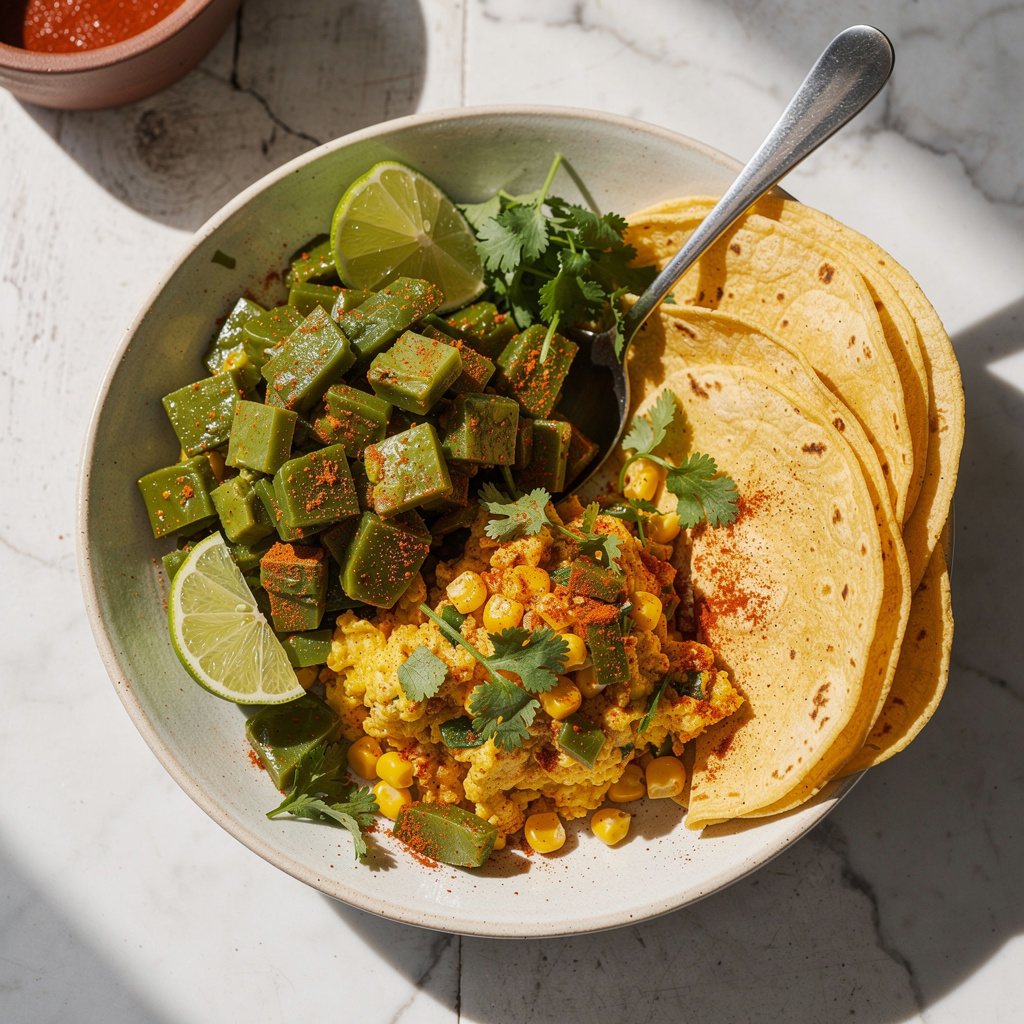
Nopales Breakfast Tacos (Cactus)
Cooking tips: Nopales are prickly cactus paddles with tiny thorns that must be removed before cooking. If you buy them fresh and uncleaned, the thorns can be scraped off easily. If fresh nopales aren’t available, jarred nopales work well. Rinse them thoroughly to reduce excess salt. Storage tips: Store the cooled mixture in an airtight container in the refrigerator for 3–4 days. Reheat in a skillet over medium heat with a splash of water or oil to restore moisture. Health Benefits: Cactus (Nopales) Cactus paddles, also known as “nopales,” come from the prickly pear cactus and are widely used in Mexican cuisine for their mild flavor and naturally crisp‑tender texture. They’re rich in fiber, antioxidants, and vitamins like vitamin C, while being very low in calories and carbohydrates. For people managing diabetes, nopales can be especially beneficial because their soluble fiber helps slow digestion and supports more stable post‑meal blood sugar levels. Some research also suggests that compounds in cactus may help improve insulin sensitivity when incorporated into a balanced diet. In recipes like these tacos—paired with corn, lime, and fresh herbs—nopales add hydration, volume, and flavor without contributing to glucose spikes. Nutrition Tip: Add Viscous Fiber to Help Steady Blood Sugar Recent research highlights that foods rich in viscous (gel‑forming) soluble fiber—like nopales, oats, chia seeds, and legumes—can help slow the absorption of glucose after meals. This type of fiber thickens when mixed with liquid, creating a gentle “gel” in the digestive tract that delays carbohydrate breakdown and supports a smoother post‑meal blood sugar curve. Nopales naturally contain this kind of fiber, which makes them a smart addition to soups, tacos, and stews for anyone looking to support more stable glucose levels while still enjoying satisfying, flavorful meals. References: American Diabetes Association. Vegetables and Diabetes. Accessed 2026. Frati‑Munari AC, Gordillo BE, Altamirano P, Ariza CR. Hypoglycemic effect of Opuntia streptacantha Lemaire in NIDDM. Diabetes Care. 1988;11(1):63‑66. Zurbau A, Noronha JC, Khan TA, et al. The effect of viscous soluble fiber on glycemic control in adults with type 2 diabetes: a systematic review and meta‑analysis. Nutr Rev. 2021;79(7):735‑747.
Source: Live Tula Meal Planner
1 steps, about 35 minutes
-
01Heat the oven to 375°F. 2. Clean the cactus paddles by removing any remaining thorns or blemishes. Pat dry. Dice the nopales into 1‑inch pieces and place them on a lined baking sheet. Drizzle with ½ tablespoon olive oil and toss to coat. Roast for about 15 minutes, stirring once, until tender. Set aside. 3. In a small bowl, mix the chili powder, sea salt, cumin, smoked paprika, oregano, and black pepper. Add 2 tablespoons of water and stir into a paste. 4. Warm a large skillet over medium‑high heat. Add 2 tablespoons olive oil and the diced onion. Cook for about 5 minutes until softened. Add the garlic and cook 1 minute more. 5. Crumble the tofu directly into the skillet. Stir well and cook for about 10 minutes, letting the tofu brown lightly. Stir frequently. 6. Add the spice paste to the tofu and cook for 5 minutes, allowing the flavors to absorb. Stir in the nutritional yeast and cook 2 minutes more. Add a splash of water if the mixture looks dry. 7. Fold in the chopped cilantro and the roasted nopales. Turn off the heat. 8. Warm the corn tortillas on a comal or nonstick skillet for 15–30 seconds per side. 9. Serve the tofu‑nopales scramble in warm tortillas with avocado, lime, and salsa if you like.
Cooking tips: Nopales are prickly cactus paddles with tiny thorns that must be removed before cooking. If you buy them fresh and uncleaned, the thorns can be scraped off easily. If fresh nopales aren’t available, jarred nopales work well. Rinse them thoroughly to reduce excess salt. Storage tips: Store the cooled mixture in an airtight container in the refrigerator for 3–4 days. Reheat in a skillet over medium heat with a splash of water or oil to restore moisture. Health Benefits: Cactus (Nopales) Cactus paddles, also known as “nopales,” come from the prickly pear cactus and are widely used in Mexican cuisine for their mild flavor and naturally crisp‑tender texture. They’re rich in fiber, antioxidants, and vitamins like vitamin C, while being very low in calories and carbohydrates. For people managing diabetes, nopales can be especially beneficial because their soluble fiber helps slow digestion and supports more stable post‑meal blood sugar levels. Some research also suggests that compounds in cactus may help improve insulin sensitivity when incorporated into a balanced diet. In recipes like these tacos—paired with corn, lime, and fresh herbs—nopales add hydration, volume, and flavor without contributing to glucose spikes. Nutrition Tip: Add Viscous Fiber to Help Steady Blood Sugar Recent research highlights that foods rich in viscous (gel‑forming) soluble fiber—like nopales, oats, chia seeds, and legumes—can help slow the absorption of glucose after meals. This type of fiber thickens when mixed with liquid, creating a gentle “gel” in the digestive tract that delays carbohydrate breakdown and supports a smoother post‑meal blood sugar curve. Nopales naturally contain this kind of fiber, which makes them a smart addition to soups, tacos, and stews for anyone looking to support more stable glucose levels while still enjoying satisfying, flavorful meals. References: American Diabetes Association. Vegetables and Diabetes. Accessed 2026. Frati‑Munari AC, Gordillo BE, Altamirano P, Ariza CR. Hypoglycemic effect of Opuntia streptacantha Lemaire in NIDDM. Diabetes Care. 1988;11(1):63‑66. Zurbau A, Noronha JC, Khan TA, et al. The effect of viscous soluble fiber on glycemic control in adults with type 2 diabetes: a systematic review and meta‑analysis. Nutr Rev. 2021;79(7):735‑747.
No notes yet.