 Side Dish
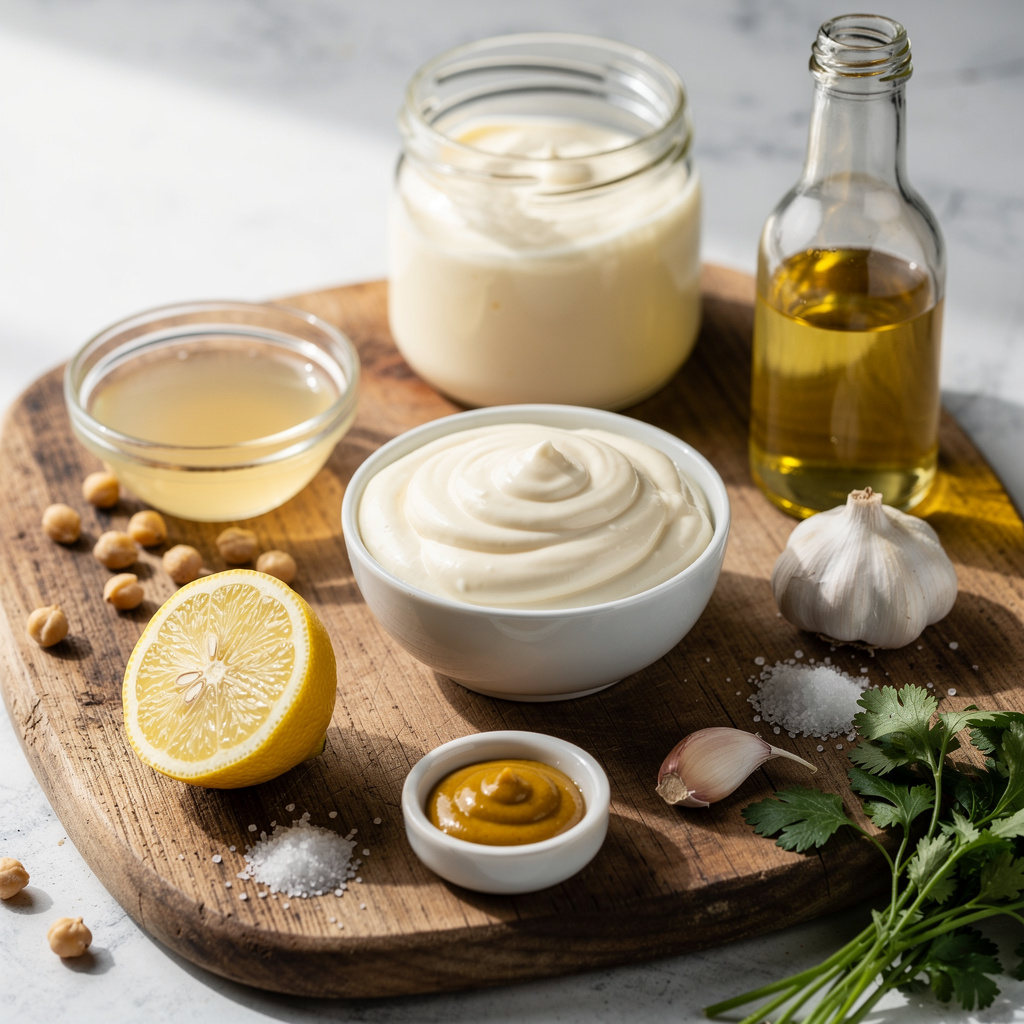
Homemade Vegan Mayo
Aquafaba is the liquid from a jar or can of chickpeas. For this recipe, a neutral-tasting oil is recommended. The mayonnaise can be stored in an airtight container in the fridge for up to 2 weeks. Health Benefits: Aquafaba Aquafaba is the starchy liquid found in canned or cooked chickpeas that has unique foaming and emulsifying properties, allowing it to replicate the texture of egg whites in foods like mayonnaise, dressings, and baked goods. Because aquafaba contains very little fat and no saturated fat, it offers a heart-healthier alternative to traditional mayonnaise bases that use eggs or higher-fat ingredients. This can be especially helpful for people with diabetes, since lowering saturated fat intake supports better insulin sensitivity and reduces cardiovascular risk. Vegan mayo made with aquafaba provides creaminess without adding unnecessary saturated fat or carbohydrates, making it a lighter option for spreads and sauces. It can be used in a wide variety of dishes such as sandwiches, wraps, burgers, grain bowls, pasta salads, potato salads, and roasted vegetables or as a base for dressings and dips, offering a flavorful and diabetes-friendly way to add moisture and richness to meals. Nutrition Tip: Flavor and Health Boosters Enhance this vegan mayo recipe with flavor boosters like garlic, fresh herbs like parsley or cilantro, or a splash of vinegar or lemon juice to elevate the taste without adding extra sugar or saturated fat. Garlic contains bioactive compounds that may help improve insulin sensitivity and support healthier fasting blood glucose levels. Fresh herbs provide antioxidants and polyphenols that support metabolic health and reduce inflammation, both of which are important for diabetes management. A small amount of vinegar or lemon juice can also help blunt post-meal glucose spikes by slowing gastric emptying. These simple additions make the vegan mayo more flavorful while adding ingredients that support blood sugar and overall metabolic health. References: American Diabetes Association. Fats and diabetes. ADA website. https://diabetes.org. Accessed March 17, 2026. Siri‑Tarino PW, Sun Q, Hu FB, Krauss RM. Saturated fat, carbohydrate, and cardiovascular disease. Am J Clin Nutr. 2010;91(3):502‑509. doi:10.3945/ajcn.2009.28401. Asbaghi O, Sadeghian M, Nazarian B, et al. The effect of garlic intake on glycemic control in adults with type 2 diabetes: a systematic review and meta analysis. Complement Ther Med. 2020;50:102389. doi:10.1016/j.ctim.2020.102389. Johnston CS, Buller AJ. Vinegar and peanut products as complementary foods to reduce postprandial glycemia. J Am Diet Assoc. 2005;105(12):1939‑1942. doi:10.1016/j.jada.2005.09.015.
Source: Live Tula Meal Planner
1 steps, about 5 minutes
-
01Use a wide-mouthed jar slightly wider than the head of your immersion blender. 2. Add the ingredients to the jar in the following order: aquafaba, lemon juice, Dijon mustard, salt, then grapeseed oil. 3. Place the immersion blender at the bottom of the jar. Turn it on and keep it at the bottom until the mixture becomes white and creamy. 4. Slowly lift the blender upward, allowing the mayo to thicken as you move toward the top. Once you reach the surface, turn off the blender. 5. Use immediately or refrigerate. Enjoy on sandwiches, burgers, or fries. For garlic mayo, blend in one crushed or roasted garlic clove.
Aquafaba is the liquid from a jar or can of chickpeas. For this recipe, a neutral-tasting oil is recommended. The mayonnaise can be stored in an airtight container in the fridge for up to 2 weeks. Health Benefits: Aquafaba Aquafaba is the starchy liquid found in canned or cooked chickpeas that has unique foaming and emulsifying properties, allowing it to replicate the texture of egg whites in foods like mayonnaise, dressings, and baked goods. Because aquafaba contains very little fat and no saturated fat, it offers a heart-healthier alternative to traditional mayonnaise bases that use eggs or higher-fat ingredients. This can be especially helpful for people with diabetes, since lowering saturated fat intake supports better insulin sensitivity and reduces cardiovascular risk. Vegan mayo made with aquafaba provides creaminess without adding unnecessary saturated fat or carbohydrates, making it a lighter option for spreads and sauces. It can be used in a wide variety of dishes such as sandwiches, wraps, burgers, grain bowls, pasta salads, potato salads, and roasted vegetables or as a base for dressings and dips, offering a flavorful and diabetes-friendly way to add moisture and richness to meals. Nutrition Tip: Flavor and Health Boosters Enhance this vegan mayo recipe with flavor boosters like garlic, fresh herbs like parsley or cilantro, or a splash of vinegar or lemon juice to elevate the taste without adding extra sugar or saturated fat. Garlic contains bioactive compounds that may help improve insulin sensitivity and support healthier fasting blood glucose levels. Fresh herbs provide antioxidants and polyphenols that support metabolic health and reduce inflammation, both of which are important for diabetes management. A small amount of vinegar or lemon juice can also help blunt post-meal glucose spikes by slowing gastric emptying. These simple additions make the vegan mayo more flavorful while adding ingredients that support blood sugar and overall metabolic health. References: American Diabetes Association. Fats and diabetes. ADA website. https://diabetes.org. Accessed March 17, 2026. Siri‑Tarino PW, Sun Q, Hu FB, Krauss RM. Saturated fat, carbohydrate, and cardiovascular disease. Am J Clin Nutr. 2010;91(3):502‑509. doi:10.3945/ajcn.2009.28401. Asbaghi O, Sadeghian M, Nazarian B, et al. The effect of garlic intake on glycemic control in adults with type 2 diabetes: a systematic review and meta analysis. Complement Ther Med. 2020;50:102389. doi:10.1016/j.ctim.2020.102389. Johnston CS, Buller AJ. Vinegar and peanut products as complementary foods to reduce postprandial glycemia. J Am Diet Assoc. 2005;105(12):1939‑1942. doi:10.1016/j.jada.2005.09.015.
No notes yet.