 Lunch, Dinner
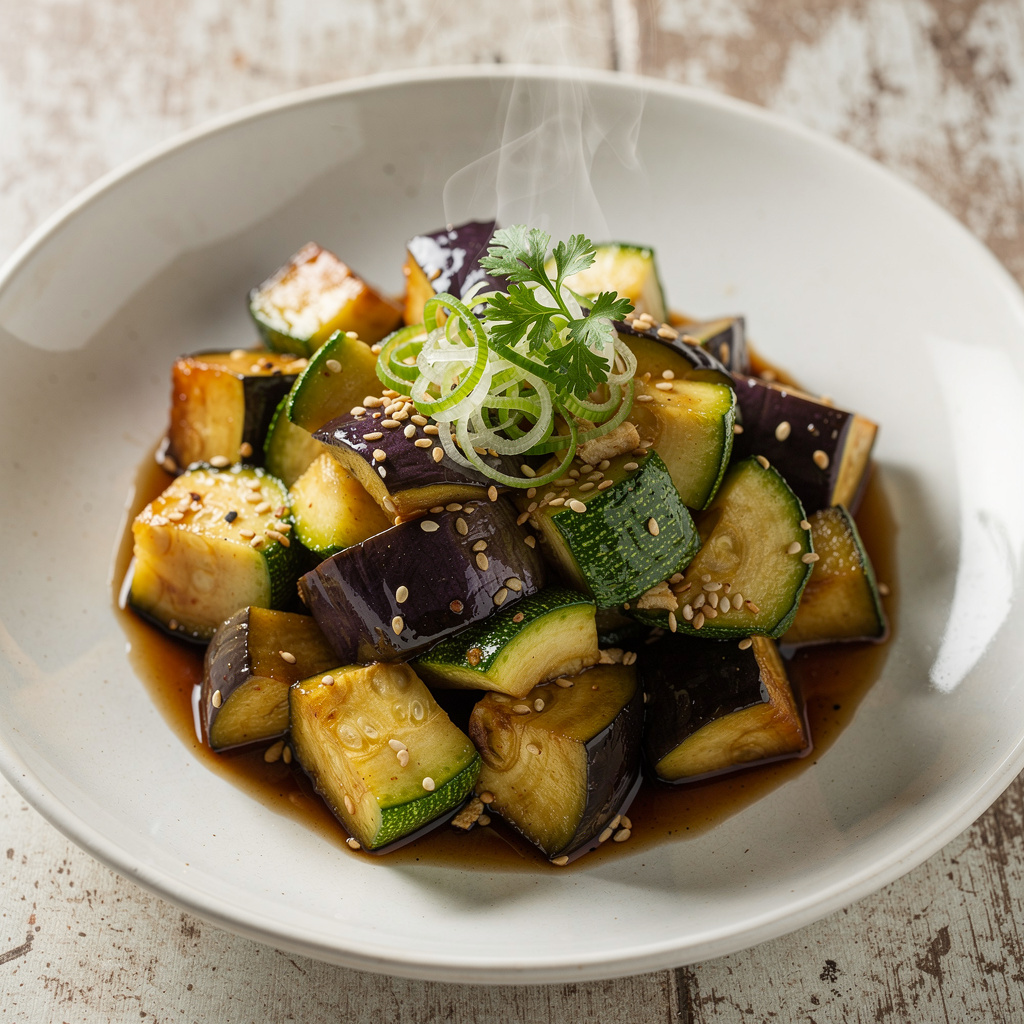
Eggplant Zucchini Stir-Fry
Store leftovers in an airtight container in the refrigerator for up to 3-4 days. Health Benefits: Eggplant Eggplant (also known as aubergine) is a non‑starchy vegetable from the nightshade family that is low in calories and carbohydrates while providing dietary fiber and powerful antioxidants. Its fiber content helps slow digestion and glucose absorption, which can reduce post‑meal blood sugar spikes and support more stable blood glucose levels. Eggplant is also rich in polyphenols, including anthocyanins and chlorogenic acid, which have been shown to improve insulin sensitivity and inhibit enzymes involved in carbohydrate digestion. Because it has a low glycemic index and adds volume and satiety without significantly increasing blood sugar, eggplant can be a valuable vegetable for people with diabetes when prepared with minimal added fats. Zucchini Zucchini is a type of summer squash that is naturally low in carbohydrates and high in water and fiber, making it especially well-suited for diabetes‑friendly meals. Its fiber helps slow the release of glucose into the bloodstream, supporting better blood sugar control, while its low glycemic index means it causes minimal increases in blood glucose levels. Zucchini also provides important micronutrients such as vitamin C, potassium, and vitamin B6, which support metabolic and cardiovascular health. References: American Diabetes Association Professional Practice Committee. Nutrition therapy for adults with diabetes or prediabetes: a consensus report. Diabetes Care. 2019;42(5):731‑754. doi:10.2337/dci19‑0014 Sharma K, et al. Role of polyphenols in regulation of glucose metabolism. Nutrients. 2020;12(5):1342. doi:10.3390/nu12051342 Post RE, et al. Dietary fiber and glycemic control in diabetes: a meta‑analysis. J Am Board Fam Med. 2012;25(1):16‑23. doi:10.3122/jabfm.2012.01.110148
Source: Live Tula Meal Planner
1 steps, about 20 minutes
-
01Prepare the vegetables: Dice the zucchini and eggplant, mince the ginger and garlic, and thinly slice the spring onions. 2. In a small bowl, whisk together the soy sauce and sugar until the sugar dissolves. Set aside. 3. Heat 2 tablespoons of olive oil in a wok or large skillet over medium‑high heat. Add the zucchini and cook for 3-4 minutes, until golden brown. Remove from the pan and set aside. 4. Add the remaining 2 tablespoons of olive oil to the pan. Add the eggplant and cook for 5-7 minutes, stirring occasionally, until tender and lightly browned. 5. Add the ginger and garlic and cook for 30 seconds until fragrant. 6. Return the zucchini to the pan, add the spring onions, and pour in the soy sauce mixture. Stir well and cook for 1-2 minutes, until everything is evenly coated and glossy. 7. Remove from heat, sprinkle with roasted sesame seeds, and serve immediately. Enjoy it on its own or with a side of rice or noodles.
Store leftovers in an airtight container in the refrigerator for up to 3-4 days. Health Benefits: Eggplant Eggplant (also known as aubergine) is a non‑starchy vegetable from the nightshade family that is low in calories and carbohydrates while providing dietary fiber and powerful antioxidants. Its fiber content helps slow digestion and glucose absorption, which can reduce post‑meal blood sugar spikes and support more stable blood glucose levels. Eggplant is also rich in polyphenols, including anthocyanins and chlorogenic acid, which have been shown to improve insulin sensitivity and inhibit enzymes involved in carbohydrate digestion. Because it has a low glycemic index and adds volume and satiety without significantly increasing blood sugar, eggplant can be a valuable vegetable for people with diabetes when prepared with minimal added fats. Zucchini Zucchini is a type of summer squash that is naturally low in carbohydrates and high in water and fiber, making it especially well-suited for diabetes‑friendly meals. Its fiber helps slow the release of glucose into the bloodstream, supporting better blood sugar control, while its low glycemic index means it causes minimal increases in blood glucose levels. Zucchini also provides important micronutrients such as vitamin C, potassium, and vitamin B6, which support metabolic and cardiovascular health. References: American Diabetes Association Professional Practice Committee. Nutrition therapy for adults with diabetes or prediabetes: a consensus report. Diabetes Care. 2019;42(5):731‑754. doi:10.2337/dci19‑0014 Sharma K, et al. Role of polyphenols in regulation of glucose metabolism. Nutrients. 2020;12(5):1342. doi:10.3390/nu12051342 Post RE, et al. Dietary fiber and glycemic control in diabetes: a meta‑analysis. J Am Board Fam Med. 2012;25(1):16‑23. doi:10.3122/jabfm.2012.01.110148
No notes yet.