 Main Dish
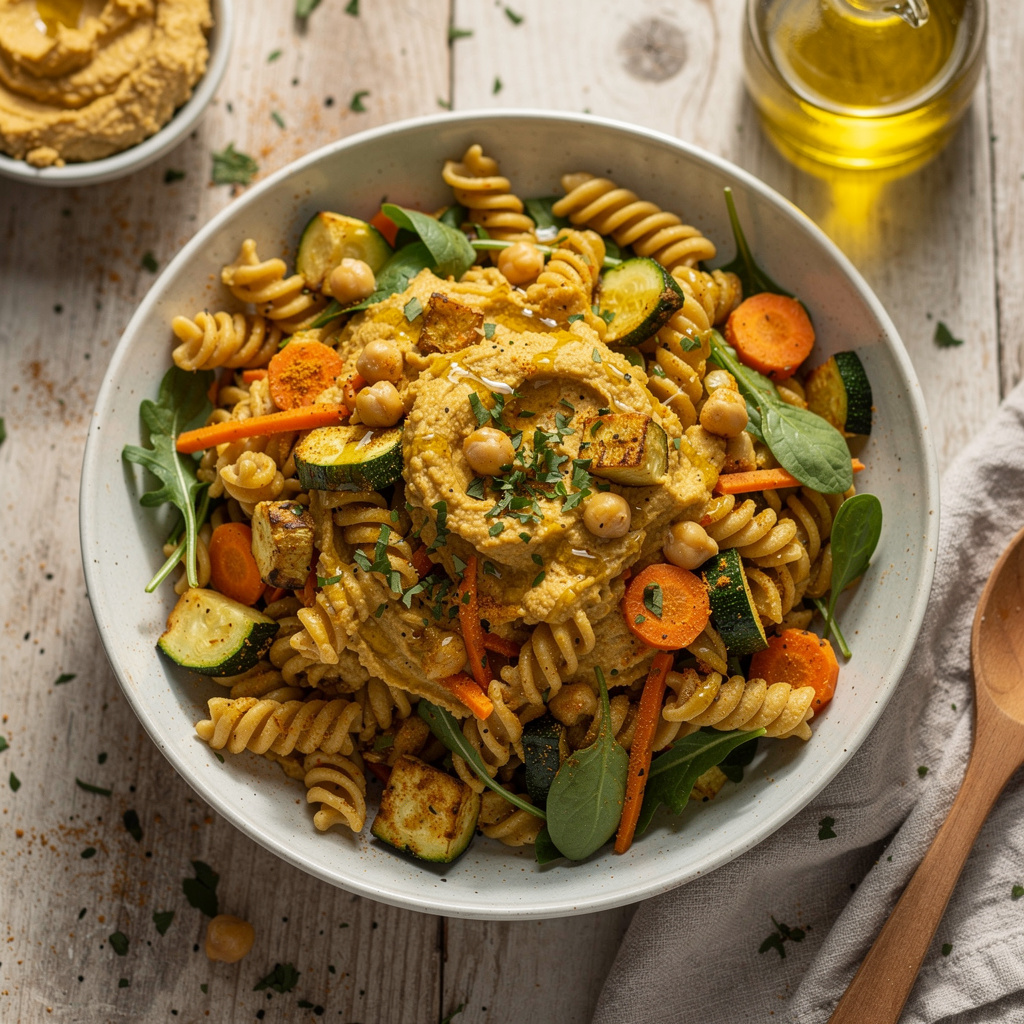
Hummus Pasta Salad
The assembled salad is best enjoyed immediately. Store the pasta salad base separately from the sauce in an airtight container in the fridge for up to 3 days. Combine when ready to enjoy. Health Benefits: Hummus Hummus is a creamy spread traditionally made from blended chickpeas, tahini, olive oil, lemon, and garlic, offering a nutrient‑dense combination of plant‑based protein, fiber, and healthy fats. The fiber and protein in chickpeas slow digestion and help reduce post‑meal blood‑sugar spikes, while the monounsaturated fats from tahini and olive oil support improved insulin sensitivity and heart health. Because hummus provides steady energy and enhances satiety without added sugars, it can be a helpful addition to balanced meals for people managing diabetes. Nutrition Tip: Colorful Crunch for Steady Blood Sugar Zucchini and carrots add a mix of green and orange pigments that signal different vitamins and antioxidants. Green zucchini provides vitamin C and phytonutrients that support overall metabolic health, while orange carrots supply betacarotene, a precursor to vitamin A that supports immune and eye health. Together, these vegetables add fiber, water content, and natural volume, all of which help slow digestion and support steadier bloodsugar responses. Their low carbohydrate content and high fiber help reduce how quickly glucose enters the bloodstream, while the added volume promotes fullness without extra calories. Including colorful non-starchy vegetables like zucchini and carrots in pasta dishes is a simple strategy that helps balance the plate and create a more gradual rise in blood sugar. References: American Diabetes Association. Beans and legumes. https://diabetes.org/food-nutrition/food-and-drink/beans-and-legumes Schwingshackl L, Hoffmann G. Monounsaturated fatty acids and risk of cardiovascular disease. Nutrients. 2012;4(12):1989‑2007. American Diabetes Association. Non‑starchy vegetables. Accessed February 2026. https://diabetes.org/food-nutrition/food-and-drink/non-starchy-vegetables Dahl WJ, Stewart ML. Position of the Academy of Nutrition and Dietetics: Health implications of dietary fiber. J Acad Nutr Diet. 2015;115(11):1861‑1870.
Source: Live Tula Meal Planner
1 steps, about 30 minutes
-
01Cook the pasta per package instructions in salted boiling water until al dente. Drain and transfer to a large bowl. 2. Meanwhile, heat the olive oil in a medium pan over medium‑high heat. Add the cubed zucchini and cook until lightly golden, about 4 to 5 minutes. 3. Add the curry powder and salt. Cook for another 2 to 3 minutes, stirring often. Transfer the zucchini mixture to the large bowl. 4. Add all hummus dressing ingredients to a small food processor and blend until smooth. 5. Add the grated carrot, chopped tomato, chopped parsley, and spinach to the bowl with the pasta. 6. Pour the hummus dressing over the salad and toss to combine. Enjoy.
The assembled salad is best enjoyed immediately. Store the pasta salad base separately from the sauce in an airtight container in the fridge for up to 3 days. Combine when ready to enjoy. Health Benefits: Hummus Hummus is a creamy spread traditionally made from blended chickpeas, tahini, olive oil, lemon, and garlic, offering a nutrient‑dense combination of plant‑based protein, fiber, and healthy fats. The fiber and protein in chickpeas slow digestion and help reduce post‑meal blood‑sugar spikes, while the monounsaturated fats from tahini and olive oil support improved insulin sensitivity and heart health. Because hummus provides steady energy and enhances satiety without added sugars, it can be a helpful addition to balanced meals for people managing diabetes. Nutrition Tip: Colorful Crunch for Steady Blood Sugar Zucchini and carrots add a mix of green and orange pigments that signal different vitamins and antioxidants. Green zucchini provides vitamin C and phytonutrients that support overall metabolic health, while orange carrots supply betacarotene, a precursor to vitamin A that supports immune and eye health. Together, these vegetables add fiber, water content, and natural volume, all of which help slow digestion and support steadier bloodsugar responses. Their low carbohydrate content and high fiber help reduce how quickly glucose enters the bloodstream, while the added volume promotes fullness without extra calories. Including colorful non-starchy vegetables like zucchini and carrots in pasta dishes is a simple strategy that helps balance the plate and create a more gradual rise in blood sugar. References: American Diabetes Association. Beans and legumes. https://diabetes.org/food-nutrition/food-and-drink/beans-and-legumes Schwingshackl L, Hoffmann G. Monounsaturated fatty acids and risk of cardiovascular disease. Nutrients. 2012;4(12):1989‑2007. American Diabetes Association. Non‑starchy vegetables. Accessed February 2026. https://diabetes.org/food-nutrition/food-and-drink/non-starchy-vegetables Dahl WJ, Stewart ML. Position of the Academy of Nutrition and Dietetics: Health implications of dietary fiber. J Acad Nutr Diet. 2015;115(11):1861‑1870.
No notes yet.