 Lunch, Dinner
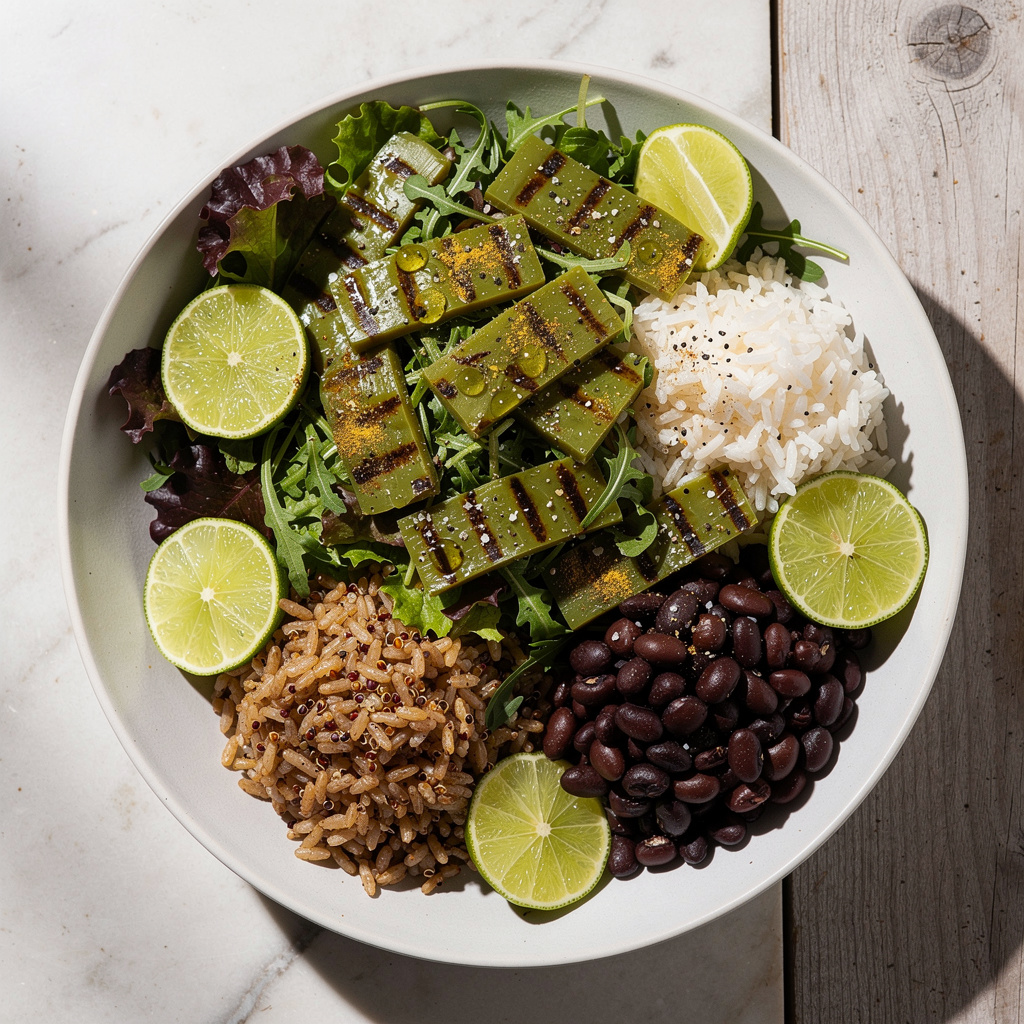
Grilled Nopales Salad (Cactus)
Cooking tips: Nopales are prickly cactus paddles with tiny thorns that must be removed before cooking. If you buy them fresh and uncleaned, the thorns can be scraped off easily. If fresh nopales aren’t available, jarred nopales work well. Rinse them thoroughly to reduce excess salt. Quinoa can be swapped for the cooked rice or black beans if you prefer a lighter texture or want to add more protein and fiber. It mixes easily with the dressing and keeps the salad fluffy while still providing the carbohydrate amount needed for the cactus to have its glucose‑buffering effect. Cooked brown rice: 1 1/2 cups Cooked white rice: 1 1/3 cups Cooked black beans: 2 cups Health Benefits: Why Cactus Works Best When Paired With Carbohydrates Cactus (nopales) contains viscous soluble fiber that slows the digestion and absorption of carbohydrates. This fiber forms a gentle gel in the gut, delaying how quickly glucose enters the bloodstream. The effect is only measurable when cactus is eaten with a carbohydrate‑containing meal because the fiber can then interact with the carbs and blunt the post‑meal glucose rise. When cactus is eaten alone, such as in a very low‑carb dish, there isn’t enough carbohydrate present for this mechanism to make a meaningful difference. Pair Cactus With a Moderate‑Carb Food To Unlock Glucose‑Steadying Benefits The viscous fiber in nopales works like a natural “speed bump,” slowing how fast carbs break down and helping support a smoother post‑meal blood sugar curve. This effect shows up most clearly when cactus is eaten alongside 50–75 g of carbohydrates, similar to the amounts used in clinical research. References: Zurbau A, Noronha JC, Khan TA, et al. The effect of viscous soluble fiber on glycemic control in adults with type 2 diabetes: a systematic review and meta‑analysis. Nutr Rev. 2021;79(7):735‑747. Frati‑Munari AC, Roca‑Villanueva H, Ariza‑Andraca R, et al. Hypoglycemic effect of Opuntia ficus‑indica in non‑insulin‑dependent diabetes mellitus patients. Phytother Res. 1992;6(2):102‑105.
Source: Live Tula Meal Planner
1 steps, about 30 minutes
-
01Clean the cactus paddles by removing any remaining thorns or blemishes. Pat dry. Rub both sides lightly with oil and season with 1/4 tsp salt and 1/4 tsp pepper, and set aside. 2. Heat the grill to 400°F. 3. In a large salad bowl, whisk together the lime juice, olive oil, remaining salt and pepper, and cumin. Stir in the minced serrano chiles and garlic. Let the dressing rest while the cactus grills. 4. Grill the cactus paddles for about 4 minutes per side, or until grill marks appear. Remove from heat and let cool slightly. 5. Add the tomatoes, red onion, avocado, and cilantro to the dressing and toss to coat. 6. Slice each cactus paddle in half lengthwise, stack the halves, and cut into 1/2‑inch strips. Add them to the salad. 7. Fold in your chosen carbohydrate base (quinoa, brown rice, or black beans) until evenly combined. 8. Sprinkle cotija cheese over the top and serve immediately, or chill for up to an hour.
Cooking tips: Nopales are prickly cactus paddles with tiny thorns that must be removed before cooking. If you buy them fresh and uncleaned, the thorns can be scraped off easily. If fresh nopales aren’t available, jarred nopales work well. Rinse them thoroughly to reduce excess salt. Quinoa can be swapped for the cooked rice or black beans if you prefer a lighter texture or want to add more protein and fiber. It mixes easily with the dressing and keeps the salad fluffy while still providing the carbohydrate amount needed for the cactus to have its glucose‑buffering effect. Cooked brown rice: 1 1/2 cups Cooked white rice: 1 1/3 cups Cooked black beans: 2 cups Health Benefits: Why Cactus Works Best When Paired With Carbohydrates Cactus (nopales) contains viscous soluble fiber that slows the digestion and absorption of carbohydrates. This fiber forms a gentle gel in the gut, delaying how quickly glucose enters the bloodstream. The effect is only measurable when cactus is eaten with a carbohydrate‑containing meal because the fiber can then interact with the carbs and blunt the post‑meal glucose rise. When cactus is eaten alone, such as in a very low‑carb dish, there isn’t enough carbohydrate present for this mechanism to make a meaningful difference. Pair Cactus With a Moderate‑Carb Food To Unlock Glucose‑Steadying Benefits The viscous fiber in nopales works like a natural “speed bump,” slowing how fast carbs break down and helping support a smoother post‑meal blood sugar curve. This effect shows up most clearly when cactus is eaten alongside 50–75 g of carbohydrates, similar to the amounts used in clinical research. References: Zurbau A, Noronha JC, Khan TA, et al. The effect of viscous soluble fiber on glycemic control in adults with type 2 diabetes: a systematic review and meta‑analysis. Nutr Rev. 2021;79(7):735‑747. Frati‑Munari AC, Roca‑Villanueva H, Ariza‑Andraca R, et al. Hypoglycemic effect of Opuntia ficus‑indica in non‑insulin‑dependent diabetes mellitus patients. Phytother Res. 1992;6(2):102‑105.
No notes yet.