 Side Dish
Black Bean Hummus
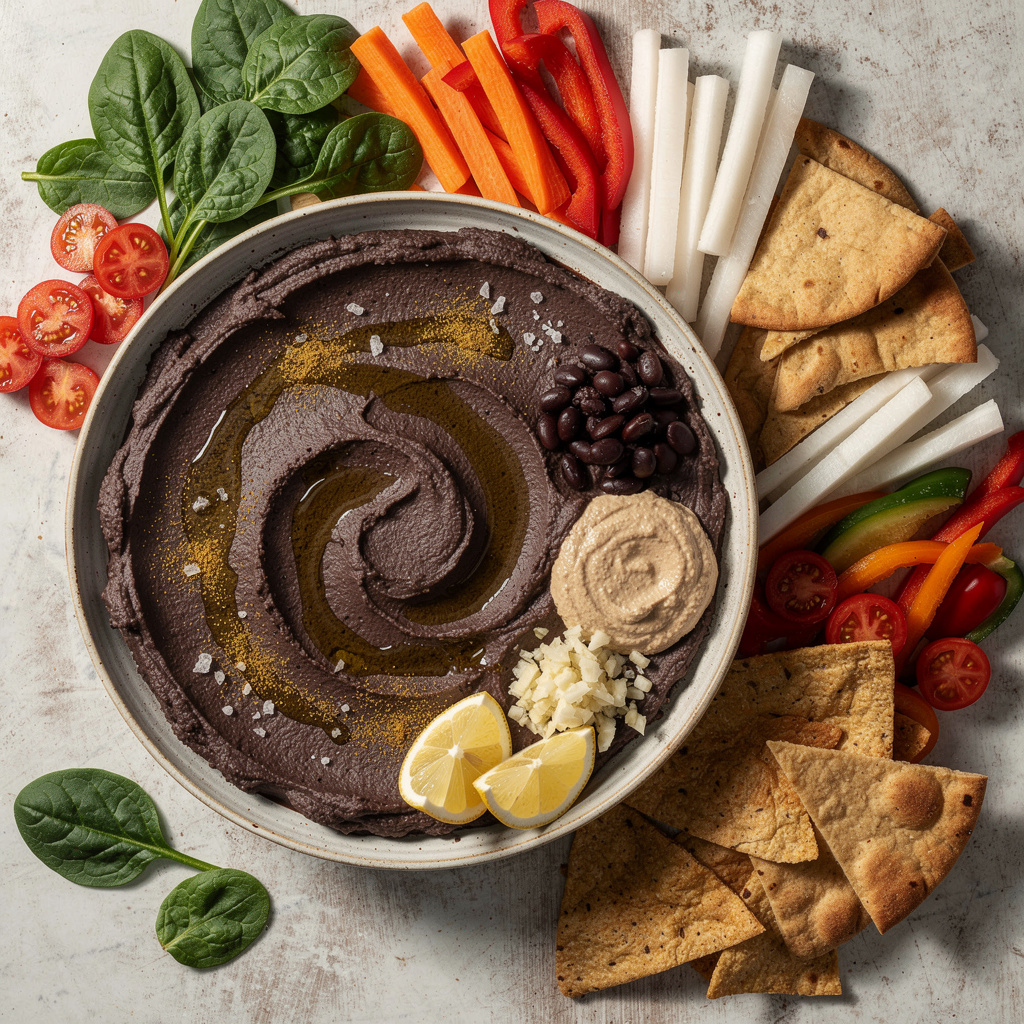
Hummus is versatile; make a big batch and enjoy it in several ways: With fresh vegetables: Try carrots, red bell peppers, and jicama or any crisp vegetable you love for dipping. In wraps or sandwiches: Add a hearty scoop as a protein-rich spread in a hummus tortilla wrap or vegetable sandwich. Pair it with sprouts, spinach, tomatoes, or your favorite combination of vegetables. As a snack: Serve with pita chips, tortilla chips, or crackers for a quick and satisfying option. Health Benefits: Black Beans Black beans are nutrient‑dense legumes known for their high fiber, plant‑based protein, and slow‑digesting carbohydrates, making them a valuable addition to a balanced diet. Their low glycemic index allows them to digest gradually, promoting steady blood glucose levels rather than rapid spikes. The combination of soluble fiber and protein helps slow glucose absorption, increase satiety, and support improved insulin sensitivity, all essential factors for diabetes management. Additionally, black beans provide beneficial micronutrients such as magnesium, potassium, iron, and folate, which contribute to heart health and metabolic regulation, key areas of focus for people with diabetes. Tahini Tahini, a creamy paste made from ground sesame seeds, is rich in healthy unsaturated fats, plant-based protein, fiber, and key minerals like magnesium, zinc, and calcium. Its low carbohydrate content and low glycemic index contribute to a slower release of glucose into the bloodstream, helping prevent sharp spikes in blood sugar. The combination of fiber, fat, and protein supports satiety and steadier post‑meal glucose responses. Additionally, sesame compounds and antioxidants found in tahini may improve insulin sensitivity and support cardiometabolic health, making it a nutritious, diabetes‑friendly ingredient. References: Deckelbaum R. Are Black Beans Good for Diabetics? A Doctor’s Guide. Healthy Food for Living. Accessed January 21, 2026. https://www.healthyfoodforliving.com/are-black-beans-good-for-diabetics/ Maverick. Are Black Beans Good for Diabetics? Science‑Backed Guide. CollectedMed. Published June 3, 2025. Accessed January 21, 2026. https://collectedmed.com/health-issues/diabetes-management/are-black-beans-good-for-diabetics/ Is Tahini Good for Diabetics? Biology Insights. Published December 13, 2025. Accessed January 21, 2026. https://biologyinsights.com/is-tahini-good-for-diabetics/
Source: Live Tula Meal Planner
1 steps, about 10 minutes
-
01Add the tahini, lemon juice, olive oil, garlic, cumin, and sea salt to a food processor or high‑powered blender. 2. Process for about 1 1/2 minutes, stopping to scrape down the sides as needed until the mixture is creamy and well combined. 3. Add the cilantro leaves and blend for another minute, scraping the sides until fully incorporated and smooth. 4. Add half of the black beans and 2 tbsp water. Blend for 1 minute, scrape down the bowl, then add the remaining black beans. Continue blending until the hummus is thick and smooth. Add additional water, 1 tbsp at a time, to reach your desired consistency. 5. Transfer to a serving bowl. Drizzle lightly with olive oil and garnish with extra cilantro, if desired. 6. Serve fresh or refrigerate leftovers in an airtight container for up to 5 days.
Hummus is versatile; make a big batch and enjoy it in several ways: With fresh vegetables: Try carrots, red bell peppers, and jicama or any crisp vegetable you love for dipping. In wraps or sandwiches: Add a hearty scoop as a protein-rich spread in a hummus tortilla wrap or vegetable sandwich. Pair it with sprouts, spinach, tomatoes, or your favorite combination of vegetables. As a snack: Serve with pita chips, tortilla chips, or crackers for a quick and satisfying option. Health Benefits: Black Beans Black beans are nutrient‑dense legumes known for their high fiber, plant‑based protein, and slow‑digesting carbohydrates, making them a valuable addition to a balanced diet. Their low glycemic index allows them to digest gradually, promoting steady blood glucose levels rather than rapid spikes. The combination of soluble fiber and protein helps slow glucose absorption, increase satiety, and support improved insulin sensitivity, all essential factors for diabetes management. Additionally, black beans provide beneficial micronutrients such as magnesium, potassium, iron, and folate, which contribute to heart health and metabolic regulation, key areas of focus for people with diabetes. Tahini Tahini, a creamy paste made from ground sesame seeds, is rich in healthy unsaturated fats, plant-based protein, fiber, and key minerals like magnesium, zinc, and calcium. Its low carbohydrate content and low glycemic index contribute to a slower release of glucose into the bloodstream, helping prevent sharp spikes in blood sugar. The combination of fiber, fat, and protein supports satiety and steadier post‑meal glucose responses. Additionally, sesame compounds and antioxidants found in tahini may improve insulin sensitivity and support cardiometabolic health, making it a nutritious, diabetes‑friendly ingredient. References: Deckelbaum R. Are Black Beans Good for Diabetics? A Doctor’s Guide. Healthy Food for Living. Accessed January 21, 2026. https://www.healthyfoodforliving.com/are-black-beans-good-for-diabetics/ Maverick. Are Black Beans Good for Diabetics? Science‑Backed Guide. CollectedMed. Published June 3, 2025. Accessed January 21, 2026. https://collectedmed.com/health-issues/diabetes-management/are-black-beans-good-for-diabetics/ Is Tahini Good for Diabetics? Biology Insights. Published December 13, 2025. Accessed January 21, 2026. https://biologyinsights.com/is-tahini-good-for-diabetics/
No notes yet.