 Side Dish
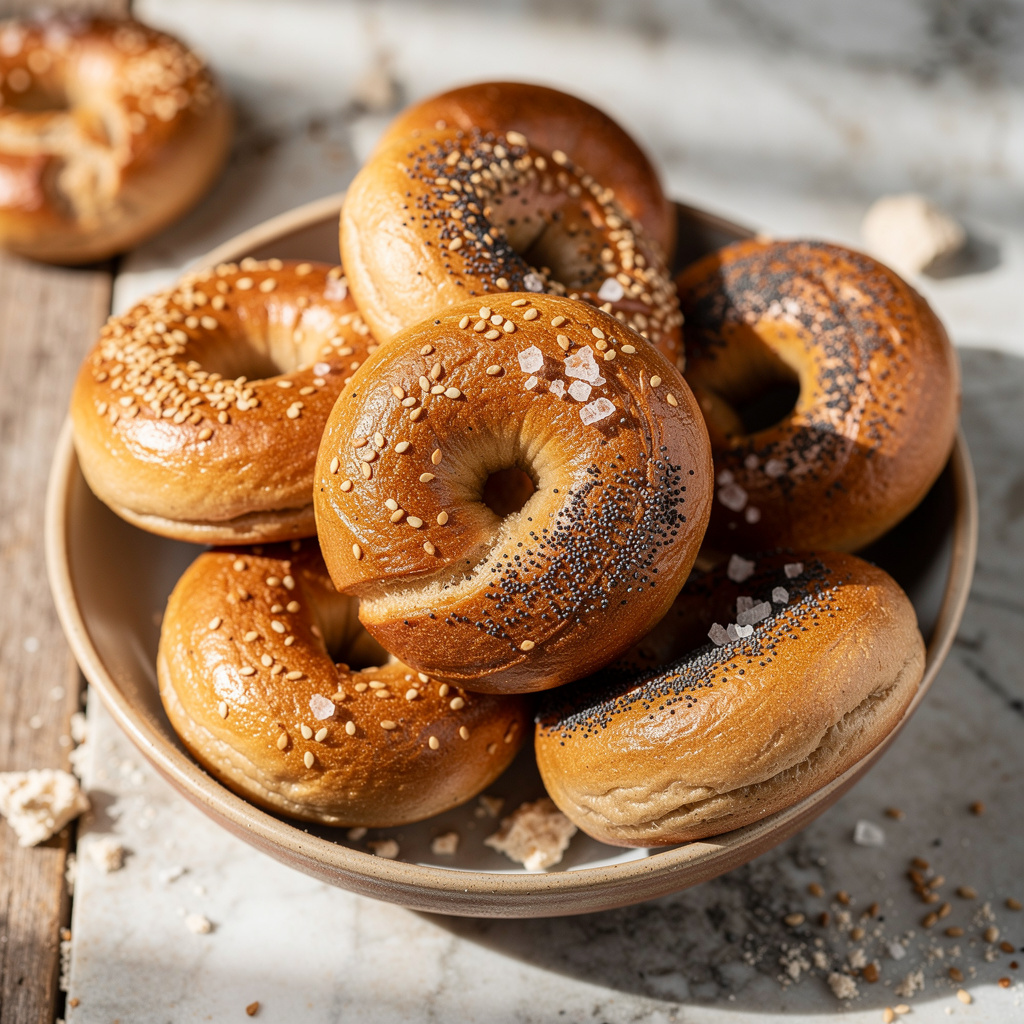
2 Ingredient Bagel (Baked)
If you do not have self‑rising flour, you can make your own by combining 1 cup of flour with 2 teaspoons of baking powder and ¾ teaspoon of salt. If time allows, refrigerate the dough for a short period of time. Chilling helps relax the dough and makes it easier to handle and shape. When arranging the bagels on the baking sheet, leave 2 to 3 inches of space between each one to allow room for expansion as they bake. This recipe can be doubled or tripled if you want to batch‑cook and prepare extra bagels for later. These bagels freeze well. For convenience, slice them before freezing so they can go straight from the freezer to the toaster. If you prefer, you can also freeze them whole and slice after thawing. Health Benefits: Greek Yogurt Greek yogurt is an excellent ingredient for people with diabetes because it is naturally high in protein and lower in carbohydrates than regular yogurt. The higher protein content helps slow digestion and supports more stable blood sugar levels throughout a meal. Research shows that yogurt consumption, especially higher‑protein varieties, is associated with improved glucose metabolism and may help lower diabetes risk over time. Its probiotics may also support gut health, which plays a role in glucose regulation. Using Greek yogurt in this bagel recipe gives the dough structure while also providing a more balanced, lower‑glycemic option that can fit well into a diabetes‑friendly eating pattern. Nutrition Tip: Choose Lower-Glycemic Flours Choose lower‑glycemic flour options when making recipes like these bagels. Traditional refined white flour has a high glycemic index, meaning it can raise blood sugar quickly. In contrast, whole‑wheat flour and other higher‑fiber flours such as oat flour or almond flour led to a slower rise in blood glucose because their fiber, fat, and protein content slows carbohydrate digestion. Option to substitute with a 1:1 ratio of low-glycemic flour with refined white flour. Even partial substitution can support more stable blood sugar levels after eating. References: Salas‑Salvadó J, Guasch‑Ferré M, Díaz‑López A, Babio N. Yogurt and Diabetes: Overview of Recent Observational Studies. J Nutr. 2017;147(7):1452S‑1461S. Biology Insights. Glycemic Index of Flours: A Chart of Common Types. Published July 24, 2025.
Source: Live Tula Meal Planner
1 steps, about 40 minutes
-
01Preheat the oven to 375°F. 2. Make the dough: In a large bowl, combine the Greek yogurt and self‑rising flour. Mix with your hands until a smooth, slightly tacky dough forms. 3. Divide the dough: Use a dough scraper or knife to cut the dough into four equal pieces. Lightly flour your work surface. 4. Shape each bagel: Roll one piece of dough back and forth on the surface until it forms a rope about 9 inches long. Place the rope on a baking sheet and shape it into a circle, tucking the ends underneath. 5. Add toppings (optional): Brush the tops with whisked egg if desired, then add any toppings such as seeds or seasonings. 6. Bake: Place the baking sheet in the oven and bake for 25 minutes. Allow the bagels to cool for 15 minutes before serving.
If you do not have self‑rising flour, you can make your own by combining 1 cup of flour with 2 teaspoons of baking powder and ¾ teaspoon of salt. If time allows, refrigerate the dough for a short period of time. Chilling helps relax the dough and makes it easier to handle and shape. When arranging the bagels on the baking sheet, leave 2 to 3 inches of space between each one to allow room for expansion as they bake. This recipe can be doubled or tripled if you want to batch‑cook and prepare extra bagels for later. These bagels freeze well. For convenience, slice them before freezing so they can go straight from the freezer to the toaster. If you prefer, you can also freeze them whole and slice after thawing. Health Benefits: Greek Yogurt Greek yogurt is an excellent ingredient for people with diabetes because it is naturally high in protein and lower in carbohydrates than regular yogurt. The higher protein content helps slow digestion and supports more stable blood sugar levels throughout a meal. Research shows that yogurt consumption, especially higher‑protein varieties, is associated with improved glucose metabolism and may help lower diabetes risk over time. Its probiotics may also support gut health, which plays a role in glucose regulation. Using Greek yogurt in this bagel recipe gives the dough structure while also providing a more balanced, lower‑glycemic option that can fit well into a diabetes‑friendly eating pattern. Nutrition Tip: Choose Lower-Glycemic Flours Choose lower‑glycemic flour options when making recipes like these bagels. Traditional refined white flour has a high glycemic index, meaning it can raise blood sugar quickly. In contrast, whole‑wheat flour and other higher‑fiber flours such as oat flour or almond flour led to a slower rise in blood glucose because their fiber, fat, and protein content slows carbohydrate digestion. Option to substitute with a 1:1 ratio of low-glycemic flour with refined white flour. Even partial substitution can support more stable blood sugar levels after eating. References: Salas‑Salvadó J, Guasch‑Ferré M, Díaz‑López A, Babio N. Yogurt and Diabetes: Overview of Recent Observational Studies. J Nutr. 2017;147(7):1452S‑1461S. Biology Insights. Glycemic Index of Flours: A Chart of Common Types. Published July 24, 2025.
No notes yet.